Our Business Our Business Top CLOSE
- Our Business
- Our Company
-
IR Info
IR Info IR Info Top CLOSE
- Sustainability















- Home
- Sustainability
- Environment
Environment
Environmental Management/ Environmental Policy
Basic Approach
The MIRAINI Group recognizes that environmental conservation is essential for the well-being of the planet and positions it as a key management priority in achieving a sustainable society. The group strives to promote environment conservation through its business activities, aiming to create a prosperous society in which nature and people coexist in harmony. In addition, the group is committed to developing technologies and providing services that balance the environmental and economic value, thereby contributing to the realization of a sustainable society.
Based on this fundamental approach, the MIRAINI Group has formulated an environmental policy and will implement various environmental initiatives as well as measures to address climate change, including those based on ISO 14001.
Hagiwara Electric Group Environmental Policy
This Environmental Policy has been resolved by the Board of Directors based on the consultations of the Sustainability Committee.
- We comply with environmental laws and regulations associated with our business activities, as well as other requirements to which we have agreed.
- To realize a society where nature and people coexist, we strive to prevent and reduce environmental pollution, and reduce the following environmental impacts.
- We aim to achieve carbon neutrality by reducing greenhouse gas emissions through energy conservation and promoting the use of renewable energy.
- We give due consideration to the environmental conservation of natural ecosystems and the maintenance and conservation of biodiversity.
- We make effective use of resources by reducing water and energy consumption, reducing waste, and recycling.
- The Hagiwara Electric Group prioritizes the procurement of products and services with minimal environmental impact whenever possible.
- We establish an environmental management system, set environmental targets, review them periodically, and aim for continuous improvement.
- We raise environmental awareness by making this policy known to all employees, and actively disclose it to the external stakeholders.
Environmental Management System
The Hagiwara Electric Group is strengthening its group-wide management through a systematic and effective management structure aligned with ISO 14001 in order to promote environmental management across all group companies.
In line with the policies and key themes of the MIRAINI Holdings Sustainability Promotion Committee, we deploy concrete initiatives to address environmental issues across relevant departments and environmental management systems (EMS) at each group company, thereby promoting activities tailored to each organization.
Status of Environmental Management System Certification
We have acquired ISO 14001 management system certification for the following sites, and actively promote EMS activities centered on environmental management systems.
Multiple sites have acquired ISO14001 certification and are actively promoting EMS initiatives, focusing on our environmental management system.
- HAGIWARA ELECTRIC HOLDINGS CO., LTD.
Headquarters:2-2-1 Higashi Sakura, Higashi-ku, Nagoya-shi, Aichi - HAGIWARA ELECTRONICS CO., LTD.
Headquarters:2-2-1 Higashi Sakura, Higashi-ku, Nagoya-shi, Aichi 461-0005
Miyoshi Distribution Center:122 Kawaguro, Miyoshi-cho, Miyoshi-shi, Aichi - HAGIWARA HOKUTO TECHNO CO., LTD.
Headquarters:4-2-25 Meieki, Nakamura-ku, Nagoya-shi, Aichi - HAGIWARA TECHNO SOLUTIONS CO., LTD.
Headquarters:2-28-23 Izumi, Higashi-ku, Nagoya-shi, Aichi - HAGIWARA TECHNO SOLUTIONS CO., LTD.
Development & Production Division
Nisshin Office:7 Shimokofukada, Asada-cho, Nisshin-shi, Aichi
Priority Activity Themes
Toward the realization of a society in which people and nature coexist, the Hagiwara Electric Group has set three priority themes of climate change, biodiversity and resource circulation, and work to preserve and improve the sustainable global environment.
 |
Climate change | Reducing GHG emissions from our business operations (Scope 1 and 2), contributing to emission reductions across the supply chain (Scope 3), and supporting carbon neutrality through our business activities. |
 |
Biodiversity | Striving to minimize the negative impact of our business activities on ecosystems, and contributing to nature-positive outcomes through biodiversity conservation efforts in collaboration with local communities. |
 |
Resource Circulation | Contributing to resource circulation through sustainable resource use, minimizing resource consumption, reducing waste, and promoting recycling. |
Climate Change
Basic Approach
The MIRAINI Group recognizes climate change as one of its key management issues and has identified “Addressing Environmental Issues with a Focus on Climate Change” as one of its material issues. The Group is committed to reducing GHG emissions generated through its business activities and promoting the use of renewable energy. In addition, through the provision of environmentally friendly products and services, the Group advances decarbonization initiatives and contributes to the realization of a sustainable society.
Disclosure Based on the TCFD Recommendations
The Hagiwara Electric Group expressed its support for the recommendations of the Task Force on Climate-related Financial Disclosures (TCFD)*1 in 2023 and joined the TCFD Consortium.
Under the TCFD framework, the Group collaborates with companies and organizations that support the TCFD recommendations and is committed to enhancing disclosures based on the four core elements recommended by the TCFD: Governance, Strategy, Risk Management, and Metrics and Targets.
Since April 2026, MIRAINI Holdings has participated in the GX Future Consortium*2, the successor organization to the TCFD Consortium, with the aim of sharing knowledge and gathering information related to Green Transformation (GX). By leveraging the knowledge and insights gained through participation in the Consortium, the Group aims to further enhance its climate-related disclosures and appropriately address climate-related risks and opportunities.

- Task Force on Climate-related Financial Disclosures (TCFD)
The TCFD is a task force established by the Financial Stability Board in 2015 at the request of the G20. It recommends that companies assess the financial impacts of climate-related risks and opportunities on their businesses and disclose information related to Governance, Strategy, Risk Management, and Metrics and Targets.
- GX Future Consortium
The GX Future Consortium is a framework established to realize a virtuous cycle of decarbonization and economic growth through collaboration among national and local governments, private-sector companies, and other stakeholders committed to GX. The Consortium promotes the development of rules for financing and demand creation, as well as strategic information sharing and stakeholder engagement. It was launched in April 2026 through the integration of the former TCFD Consortium and the former GX League.
Information-Disclosure Items Set Forth in TCFD Recommendations
| Basic Items | Outline | Detailed disclosure |
|---|---|---|
| Governance | The organization’s governance around climate-related risks and opportunities |
|
| Strategy | Impacts of climate-related risks and opportunities on the organization’s businesses, strategy, and financial planning |
|
| Risk management | Processes for identifying, assessing, and managing climate-related risks |
|
| Metrics and targets | Metrics and targets used to assess and manage relevant climate-related risks and opportunities |
|
Governance
In July 2022, the Hagiwara Electric Group established its Sustainability Committee, chaired by the Representative Director, President and Executive Officer, in order to promote sustainability management across all group companies. Under the systematic and effective management structure centered on the Sustainability Committee, we have formulated sustainability policies, including those related to environmental issues such as addressing climate change and promoting carbon neutrality, discussed and decided upon measures to address material issues, monitored the progress of these measures, and promoted sustainability initiatives while strengthening group management. Following the establishment of MIRAINI Holdings in April 2026, we will continue these initiatives while operating under a new and more appropriate sustainability promotion framework.
Major activities and important matters relating to the promotion of sustainability are discussed by the MIRAINI Holdings Sustainability Promotion Committee. Based on the Committee's examination and judgement, important matters are discussed and decided upon at management meetings and meetings of the Board of Directors according to their significance. Thus, our operating system is designed to ensure appropriate supervision and guidance by the Board of Directors.
As MIRAINI Holdings, we recognize climate change as one of our key management issues and will continue to integrate our climate-related initiatives with the TCFD framework.
Strategy
The Hagiwara Electric Group has conducted a quantitative scenario analysis based on a 2 degrees scenario that concerns the period up to 2050. We comprehensively analyzed the short, medium, and long-term risks and business opportunities of the Hagiwara Electric Group related to climate change, and identified the following key risks and opportunities.
We set matters that we believe will have a large impact on our businesses and corporate activities as “important matters,” and extracted these. As a result, in the area of transition risks, we extracted matters such as the effects of the introduction of carbon taxes and other changes to various laws and regulations on costs, and unaddressed risks related to information-disclosure needs. Furthermore, in the area of physical risks, we extracted matters such as supply-chain disruptions caused by the intensification of abnormal weather, and risks regarding declines in sales caused by the effects of a rise in average temperatures and so on.
Going forward, based on that analysis, we will identify risks and opportunities that apply to a 1.5 degrees scenario, reevaluate their degree of impact, consider various countermeasures, and then incorporate them into our management strategy.
Identified Risks and Opportunities
| Category | Factor | Business impact | Time frame | Impact level | |
|---|---|---|---|---|---|
| Main risks | Political measures, laws, and regulations | Orders and regulations regarding production and services for automobile-related customers | Our company has supply chains related to trading-company functions, and these include semiconductor manufacturing and other types of manufacturing If the introduction of carbon taxes and other changes to various laws and regulations have negative effects within these supply chains regarding the supply of materials, material prices, and so on, the purchasing costs of our company will increase due to a sharp rise in cost prices |
Medium -term |
Large |
| Decrease in sales and profit due to the phenomenon related to the quantity of gasoline vehicle-related parts and changes in the parts structure, as automobile-related customers shift to EVs in response to stricter policies for the automobile industry | Medium -term |
Medium | |||
| Strengthening of emission regulations | Pressure on profits due to higher logistics and transportation costs resulting from higher freight and transportation costs | Medium -term |
Medium | ||
| Technologies | Replacement of existing products with low-carbon technologies, failure to invest in new technologies, etc. | Increase in capital investment costs due to expansion of in-house power generation infrastructure such as solar power generation facilities | Medium -term |
Medium | |
| Increase in investment costs for the development of environmentally friendly in-house products (industrial computers, inspection equipment, etc.) | Medium -term |
Small | |||
| Reputation | Changes in investor and customer behavior | Possibility of insufficient response to environmental information disclosure needs (stricter ESG assessment standards, expansion of areas requiring disclosure) resulting in withdrawal of investment in the company, decline in share price, impact on human resource acquisition, and risk of human resource outflow | Medium -term |
Large | |
| Acute physical risks | Intensification of abnormal weather | Increased severity and frequency of extreme weather events, such as typhoons and floods, increases in the risk of supply chain disruptions and prolonged infrastructure outages (which would reduce sales) | Long -term |
Medium | |
| Chronic physical risks | Rise in average temperatures | Rising temperatures increasing the cost of energy used for air-conditioning in the company's offices, and the cost of renovation and rent increasing due to energy-saving renovations of buildings for coping with rising temperatures and relocations to properties with higher environmental performance | Long -term |
Small | |
| Rising temperatures increasing energy costs for our suppliers, which in turn will increase our purchasing costs due to rising costs | Long -term |
Medium | |||
| Main opportunities | Products and services | Popularization and expansion of electric vehicles | Increase in opportunities for proposals due to changes in the composition of components related to electric vehicles (motors, inverters, batteries, etc.), and increased business opportunities in software verification and development | Medium -term |
Large |
| Business changes accompanying shift to EV and energy-saving measures | Expanded business opportunities regarding battery monitoring and motor & inverter-related production equipment in the EV market as a result of policies to promote electric vehicles | Medium -term |
Large | ||
| Expanded opportunities in the IT solutions business (cutting-edge IT, DX promotion, cloud computing, etc.) and industrial equipment business (devices, infrastructure, IoT, control/analysis, etc.) for improving the efficiency, productivity and energy-saving performance of customers' manufacturing processes, as a result of growing awareness regarding environmental impact and resource conservation | Medium-term | Large | |||
| Markets | Changes to markets and trends | Increased opportunities to create innovations that contribute to solving social issues, such as carbon neutrality compliance, and participation in new businesses and wider domains | Medium to long-term | Medium | |
| Resilience | Promotion of energy-saving measures | Promotion of activities to reduce the company's internal environmental impact, increased use of environmentally friendly products such as fixtures, and improved environmental awareness among employees, resulting in an improved corporate reputation and a positive reputation regarding attracting assets | Medium -term |
Small |
【Manifestation period】
Short-term: by around 2025 Medium-term: by around 2030 Long-term: by around 2050
【Degree of impact】
We assessed the degree of impact as being, large, medium, or small based on an evaluation of quantitative results in terms of sales, profit, and operating costs.
【The following are representative examples of the scenarios we utilized】
Transition risk/opportunity: IEA Net Zero by 2050
Physical risk/opportunity: RCP 8.5
Risk management
We address climate change-related risks by referring to external scenarios, including those of the Intergovernmental Panel on Climate Change (IPCC) and the International Energy Agency (IEA). We sort out risks through scenario analysis and move forward with appropriately addressing such risks based on identifying levels of impact regarding each business and specifying risks that are of particularly high importance in light of industry trends.
As the MIRAINI Group, we will strengthen processes for managing climate-related risks, strengthen structures for integrating climate-related risk management and the comprehensive risk management of our group, and work to incorporate climate-related risks into our management strategies.
Metrics and targets
We calculated Scope 1 and Scope 2 (for FY2020 onward) and Scope 3 (for FY2021 onward) in order to achieve our medium-to-long-term greenhouse gas (GHG) emission reduction targets. On the basis of those results, we had set a reduction target for FY2027 for Scope 1 and Scope 2 (25% reduction from the reference year) and had launched specific initiatives in order to achieve those targets. However, we achieved the target by FY2023 ahead of schedule. Accordingly, as a new reduction target, we have revised our goal to achieve a reduction of 50% or more compared to the reference year by 2030. To achieve our new targets, we are fundamentally committed to essential and meaningful reduction activities based on self-initiated efforts.
Additionally, for Scope 3, we are reviewing our calculation logic to improve accuracy and ensure that our activities are appropriately reflected. Since FY2024, with the cooperation of our suppliers, we have been using primary data provided by our suppliers to calculate Scope 3 emissions for selected categories.
Scope 1, 2 and 3 Greenhouse Gas Emissions at Hagiwara Electric Group
| Emissions volume [t-CO2] | ||||||||||
|---|---|---|---|---|---|---|---|---|---|---|
| FY2020 | FY2021 | FY2022 | FY2023 | FY2024 | FY2025 | |||||
| Total for Scope 1, 2, and 3 (Market standards) | - | 584,432 | 615,806 | 740,736 | 630,659 | 666,178 | ||||
| Total for Scope 1, 2, and 3 (Location standards) | - | 584,421 | 615,724 | 741,095 | 630,996 | 666,778 | ||||
| Total for Scope 1 and 2 (Market standards) | 1,350 | 1,168 | 1,257 | 1,017 | 907 | 551 | ||||
| Total for Scope 1 and 2 (Location standards) | 1,218 | 1,157 | 1,175 | 1,376 | 1,244 | 1,151 | ||||
| Scope1 | Direct emissions | 335 | 296 | 288 | 299 | 300 | 268 | |||
| Scope2 | Indirect emissions from energy sources | Market standards | 1,015 | 872 | 969 | 718 | 607 | 283 | ||
| Location standards | 883 | 861 | 887 | 1,077 | 944 | 883 | ||||
| Scope3 | - | 583,264 | 614,549 | 739,719 | 629,752 | 665,627 | ||||
| Category1 | Purchased goods and services | Based on the input-output tables | - | 561,639 | 604,577 | 729,602 | 1,023,085 | 1,039,693 | ||
|
Input-Output Tables |
- | - | - | - | 623,757 | 656,586 | ||||
| Category2 | Capital goods | - | 695 | 622 | 1,337 | 2,007 | 2,344 | |||
| Category3 | Fuel and energy-related activities not included in Scope 1 or Scope 2 | - | 193 | 193 | 141 | 124 | 72 | |||
| Category4 | Transportation and delivery (upstream) | - | 20,384 | 8,732 | 8,225 | 3,362 | 6,112 | |||
| Category5 | Waste generated in operations | - | 59 | 110 | 82 | 62 | 40 | |||
| Category6 | Business travel | - | 92 | 98 | 103 | 123 | 133 | |||
| Category7 | Employee commuting | - | 202 | 217 | 229 | 272 | 291 | |||
| Category9 | Transportation and Distribution (downstream) | - | - | - | - | 45 | 49 | |||
About calculation of greenhouse gas emissions
【The scope of calculation for greenhouse gas emissions】
The scope of Scope 1 and 2 calculation for fiscal years 2020, 2024 and 2025 includes all consolidated subsidiaries except BELLADATI, a new subsidiary, and Scope 3 excludes some consolidated subsidiaries from the scope of calculation. Regarding the scope of calculation for fiscal years from 2021 to 2024, please see the third-party Greenhouse Gas Emissions Verification Statements below.
【Calculation method】
For Scope 1 (fuel-related), we are utilizing “Calculation Methods and Emission Factors for Calculation, Reporting, and Publication Systems” by the Ministry of the Environment and the Ministry of Economy, Trade and Industry.
For Scope 2 (electricity-related), we are utilizing “Calculation Methods and Emission Factors for Calculation, Reporting, and Publication Systems” by the Ministry of the Environment and the Ministry of Economy, Trade and Industry, and adjusted emission factors divided by electric power provider based on the Act on Promotion of Global Warming Countermeasures.
As for overseas bases, we used the latest factors, which are provided by power-supply companies each year.
For Scope 3, we are utilizing “Calculation Methods and Emission Factors for Calculation, Reporting, and Publication Systems” by the Ministry of the Environment and the Ministry of Economy, Trade and Industry.
We have excluded categories 8, 9, 11, 13, 14, and 15 because we have determined that none of our activities apply.
Starting with the 2024 fiscal year calculations, a portion of Category 1 is calculated using primary data provided by suppliers.
Starting with the 2024 fiscal year calculations, the calculation method for a portion of Category 4 has been changed to the ton-kilometer method.
We have included category 9 in the calculation from fiscal year 2024.
Categories 10, 11, and 12 are currently under review due to changes in the scope of aggregation, and we are in the process of evaluating and revising the calculation methods.
Third-party verification
The Hagiwara Electric Group gets third-party verification done by the Japan Management Association Sustainability Center for the purpose of ensuring the reliability of the calculation data.
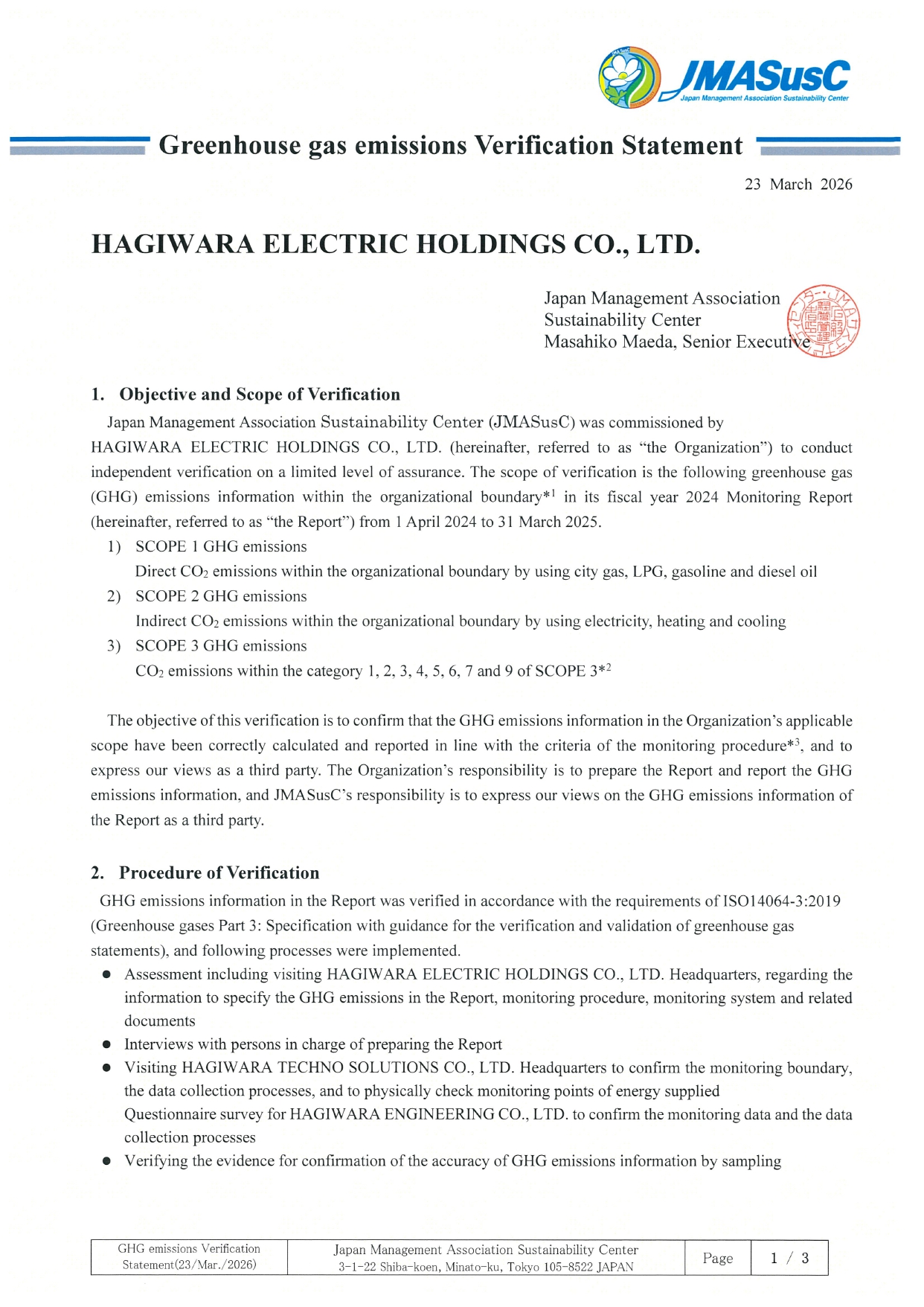
- FY2024 “Greenhouse Gas Emissions Verification Statement” (JMASusC)(PDF:2.7 MB)
- FY2023 “Greenhouse Gas Emissions Verification Statement” (JMACC)(PDF:899.9 KB)
- FY2022 “Greenhouse Gas Emissions Verification Statement” (JMACC)(PDF:878.5 KB)
- FY2021 “Greenhouse Gas Emissions Verification Statement” (JMACC)(PDF:766.7 KB)
The Hagiwara Electric Group’s Scope reduction targets
We had set a target of 25% reduction from the reference year for Scope 1 and Scope 2 by FY2027. However, we achieved the target by FY2023 ahead of schedule. Accordingly, as a new reduction target, we have revised our goal to achieve a reduction of 50% or more compared to the reference year by 2030. To achieve our new targets, we will be fundamentally committed to essential and meaningful reduction activities based on self-initiated efforts.
| Metrics | Reference year | Target year | Target level |
|---|---|---|---|
| Scope1,2 | FY2020 | FY2030 | Reduction of 50% or more |
Hagiwara Electric Group’s Initiatives Toward Carbon Neutrality
The Hagiwara Electric Group has been planning and launching activities aimed at reducing CO₂ emissions since FY2022.
Company Vehicles Management
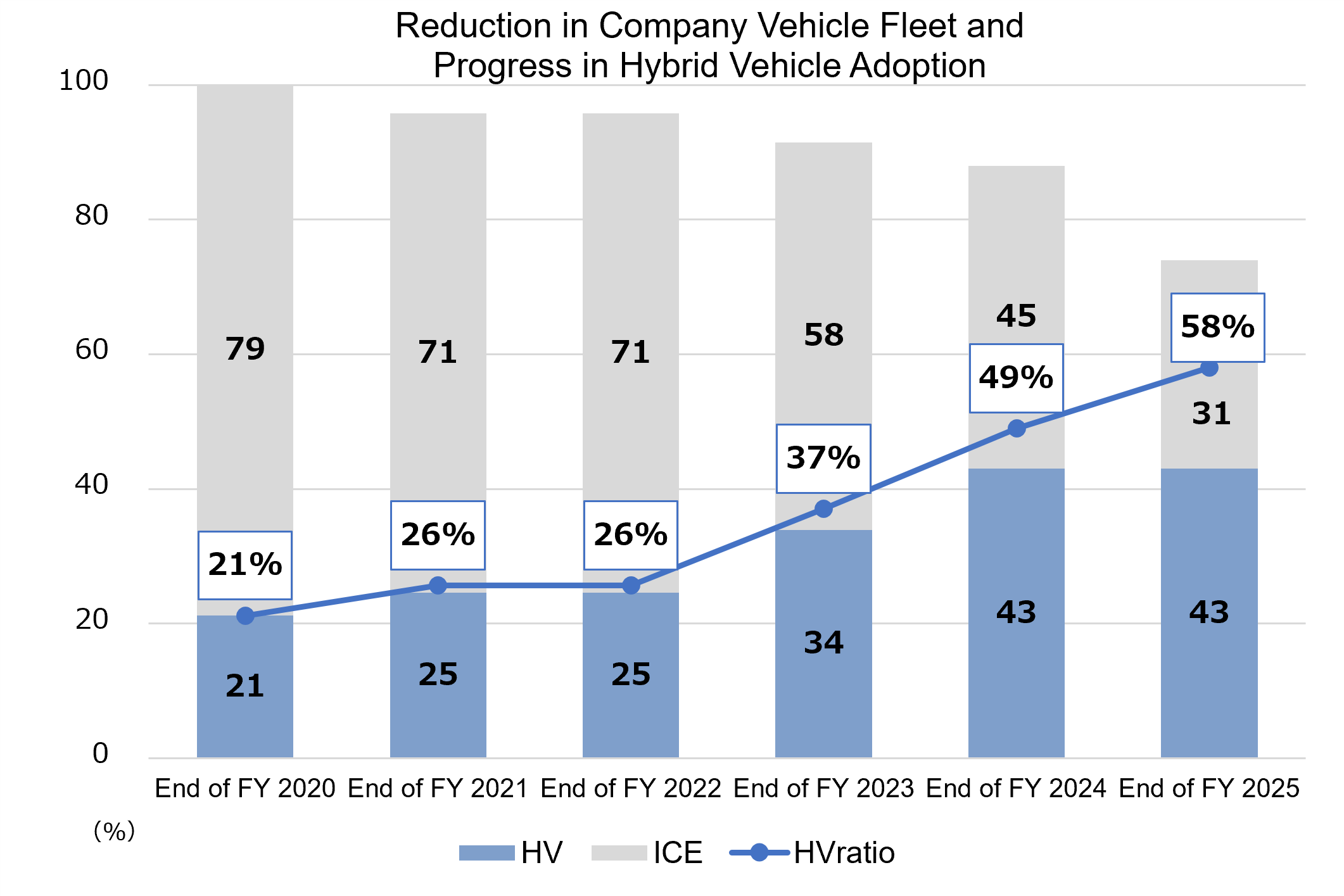
For Scope 1, we are working to reduce fuel consumption due to the use of company vehicles by systematically switching to hybrid company vehicles and using data from our telematics system (e.g., utilization rate) and promoting car sharing to reduce the number of company vehicles.
Introduction of Renewable Energy
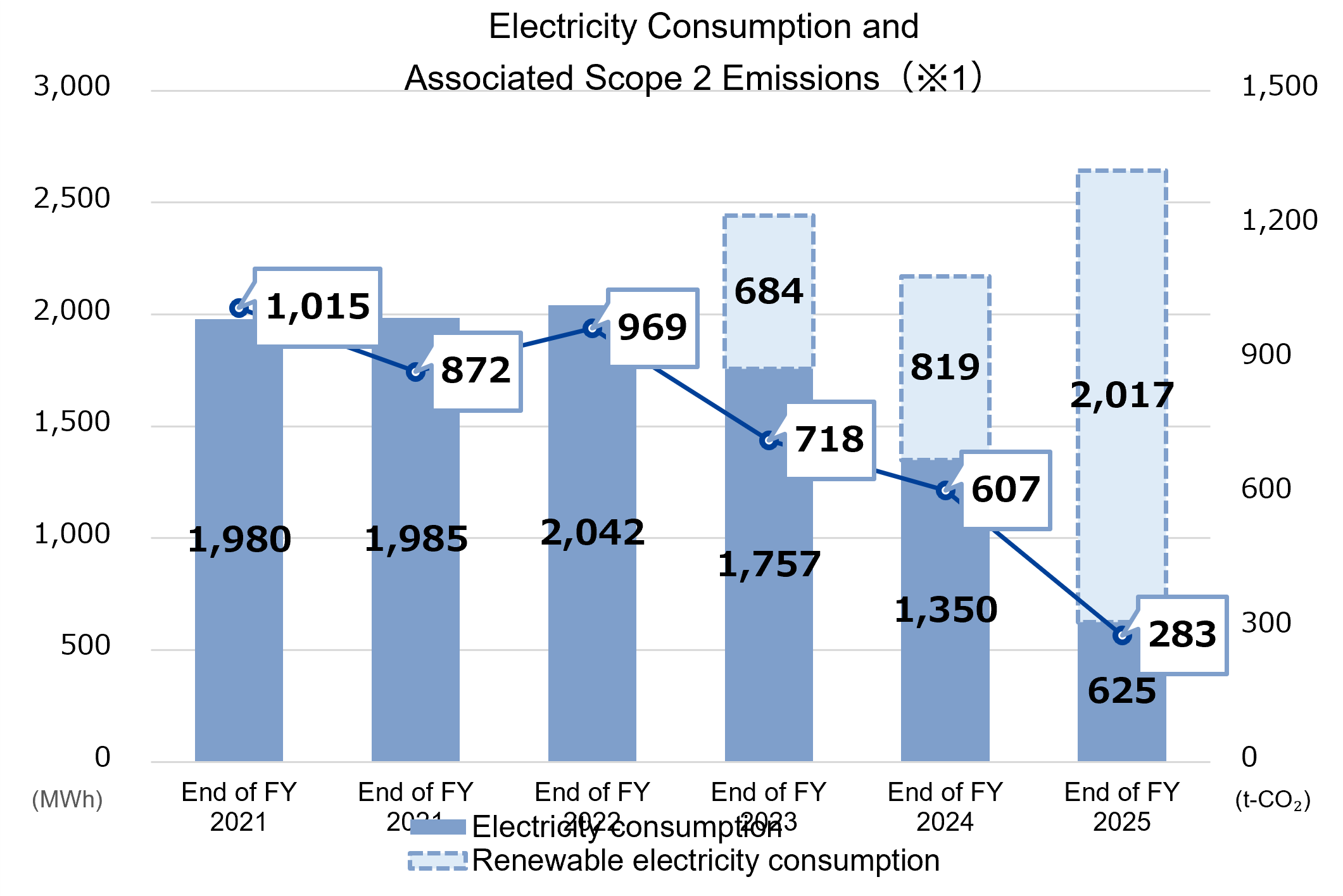
As for Scope 2, we are gradually switching the electricity used at our domestic sites to renewable energy sources to reduce GHG emissions.
As of July 2026, 6 domestic sites have introduced renewable energy sources.
- Regarding the sites included in the aggregation
All sites are included from FY2020 and from FY2023 onward.
In FY2021 and FY2022, some sites were excluded.
(Excluding BELLADATI, which was newly consolidated as a subsidiary) - Figures are calculated based on market standards.
Water Stewardship
Basic Approach
The business activities of the Hagiwara Electric Group have minimal direct impact on the natural environment. However, we recognize that the products and services we handle may have indirect effects on water resources, such as water consumption during production and usage stages.
As a first step, we are monitoring water usage within the scope of our direct operations. Based on the level of impact, we also acknowledge the need to engage with suppliers and will continue our efforts accordingly.
Main Initiatives
In assessing water security-related risks and opportunities, we identify and evaluate such risks and opportunities by collecting and utilizing external information, including expert insights. These are then reviewed by the MIRAINI Holdings Sustainability Promotion Committee and reported to the Board of Directors. Recognizing that identified risks and opportunities are subject to change, we review them at least once a year under the above governance structure and processes.
Water Consumption Management
| FY2022 | FY2023 | FY2024 | FY2025 | |
|---|---|---|---|---|
| Total water withdrawal | 10,963 | 11,648 | 9,956 | 8,989 |
| Total water discharge | 10,963 | 11,648 | 9,956 | 8,989 |
Assessment of Water Stress Areas
At Hagiwara Electric Group, we use the AQUEDUCT evaluation tool developed by the World Resources Institute (WRI) to assess water risks and identify priority regions at all domestic and overseas sites, as well as at key supplier locations.
As a result of the analysis conducted in FY2025, we confirmed that six sites across four countries (China, the United States, Thailand, and India) within the Hagiwara Electric Group are classified as high-risk in terms of water stress. The total water withdrawal at these sites in FY2025 was 501 m³, and since most of the water used in business activities is tap water for domestic purposes, we have determined that there is currently no significant risk.
| Baseline Water Stress Level | number of sites |
|---|---|
| 0:Low (<10%) | 3 |
| 1:Low-Medium (10-20%) | 3 |
| 2:Medium-High (20-40%) | 7 |
| 3:High (40-80%) | 2 |
| 4:Extremely High (>80%) | 4 |
Reduction of Environmental Impact
Basic Approach
Toward the realization of a society in which people and nature coexist, the Hagiwara Electric Group engages in activities that minimize the use of limited resources, promote reuse, and contribute to the realization of sustainable resource circulation.
Main Initiatives
Waste Management
The Hagiwara Electric Group complies with relevant laws and regulations (such as the Waste Management and Public Cleansing Act and the Act on the Promotion of Effective Utilization of Resources) and works to minimize environmental impact by reducing waste generated from our business activities, promoting reuse and recycling, and ensuring proper disposal.
Reuse of Packaging Materials at Distribution Centers
At the Miyoshi Distribution Center, we are engaged in recycling packaging materials. For product packaging at the time of shipment, we are working to reduce plastic waste by reusing surplus plastic wrapping materials from incoming shipments.
Ecocap (Bottle Cap Recycling) Activities
With the aim of contributing to resource circulation, we are engaged in the Ecocap Activities, which involves collecting plastic bottle caps purchased by employees.
The collected plastic bottle caps are donated to the NPO Eco-Cap Movement Association, where they are utilized as recycled plastic materials to promote recycling and reduce CO₂ emissions. This initiative also contributes to supporting medical care in developing countries and promoting employment opportunities for people with disabilities and the elderly through the recycling process.
LED lighting and adopting renewable energy

At our manufacturing and distribution sites, we reduce power consumption by switching to LED lighting. We also actively introduce renewable energy at these sites, and work to reduce both energy consumption and GHG emissions.
Collection of Used Clear Holders
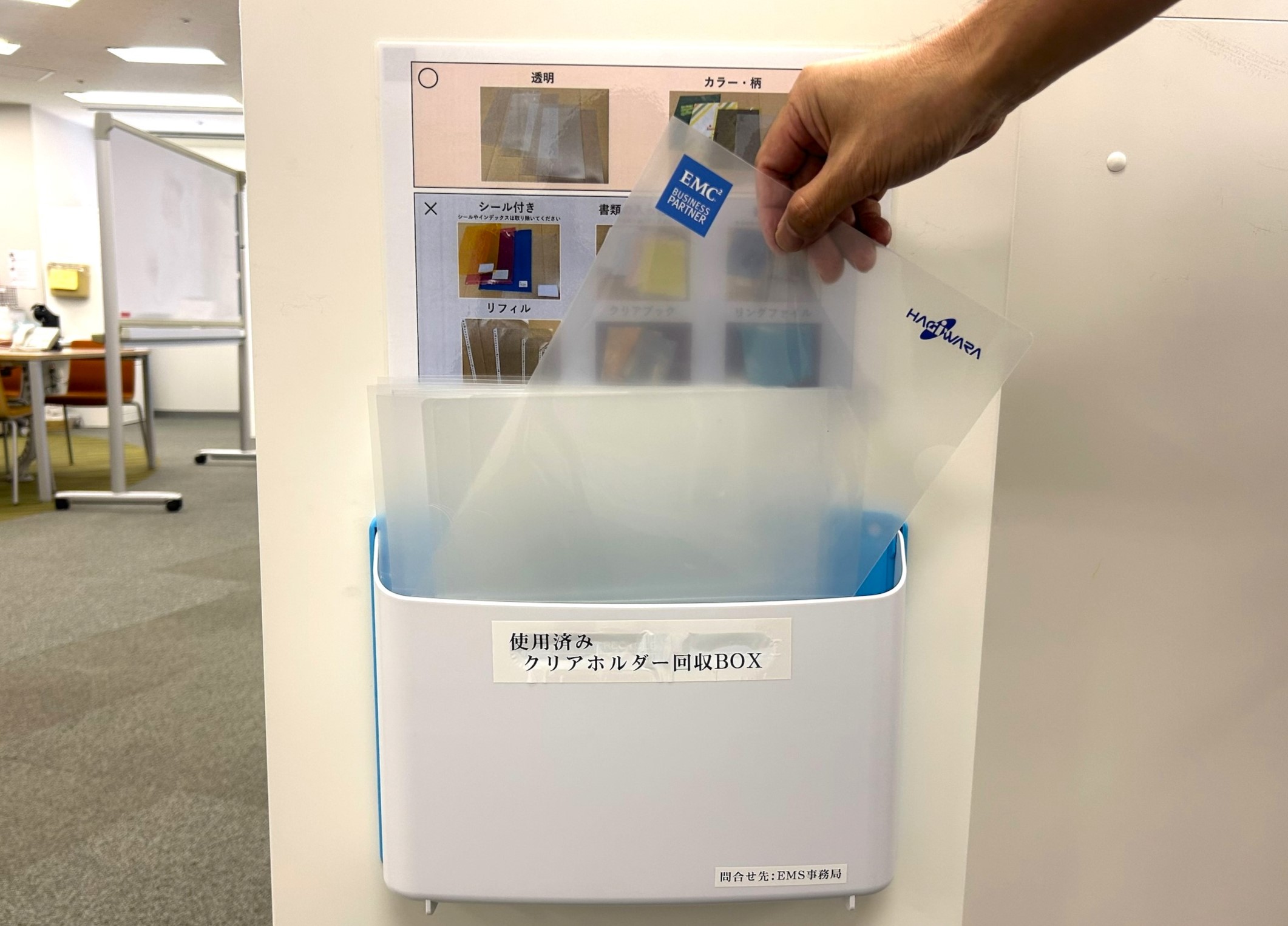
To promote effective resource utilization and reduce CO₂ emissions, we are supporting the initiative by Askul Corporation called the “Askul Resource Circulation Platform (Used Clear Holders)” and are actively promoting the collection of used clear holders throughout the company.
The collected clear holders are not only recycled into new resources and products, but the proceeds from their purchase are also donated, through Askul Corporation, to The Ocean Cleanup, an environmental non-profit organization dedicated to protecting marine ecosystems. Through this initiative, we contribute to both the advancement of a circular economy and the preservation of the global marine environment.
Introduction of Electric Vehicle (EV) Commuting Services
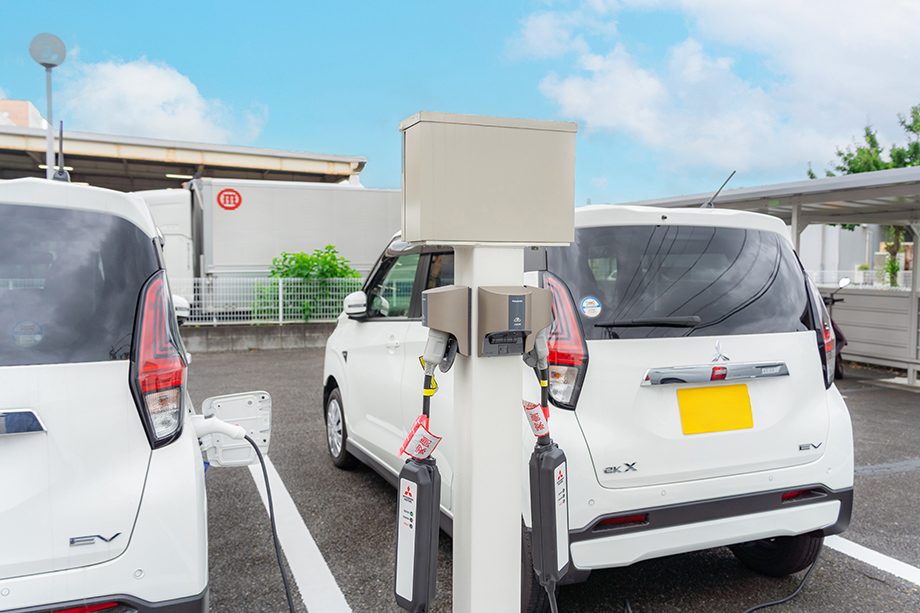
At Hagiwara Engineering, an electric vehicle (EV) commuting service has been introduced for employees seconded from group companies.
We not only ensure commuting options for employees on solo assignments who are unable to bring their personal vehicles, but also contribute to reducing GHG emissions as a company. Furthermore, the power supply ports used for EV charging are available not only for the vehicles of dispatched employees, but also for customers who visit us in EVs. We aim to reduce the environmental impact not only of our company but also of all companies involved.
Electric vehicles also play an important role from the perspective of business continuity planning (BCP), as they can be used as "running storage batteries" and as an emergency power source in the event of a disaster.
Initiatives Related to Environmentally Conscious Products

In Electronic Devices Business, which primarily handles in-vehicle devices, we contribute to reducing the power consumption of finished products through the sale of energy-efficient devices. As hybrid and electric vehicles become increasingly widespread, we also support the automotive industry's shift toward greater fuel efficiency by ensuring a stable supply of device products such as power semiconductors and microcomputers used in these vehicles. Through these efforts, we help reduce environmental impact.
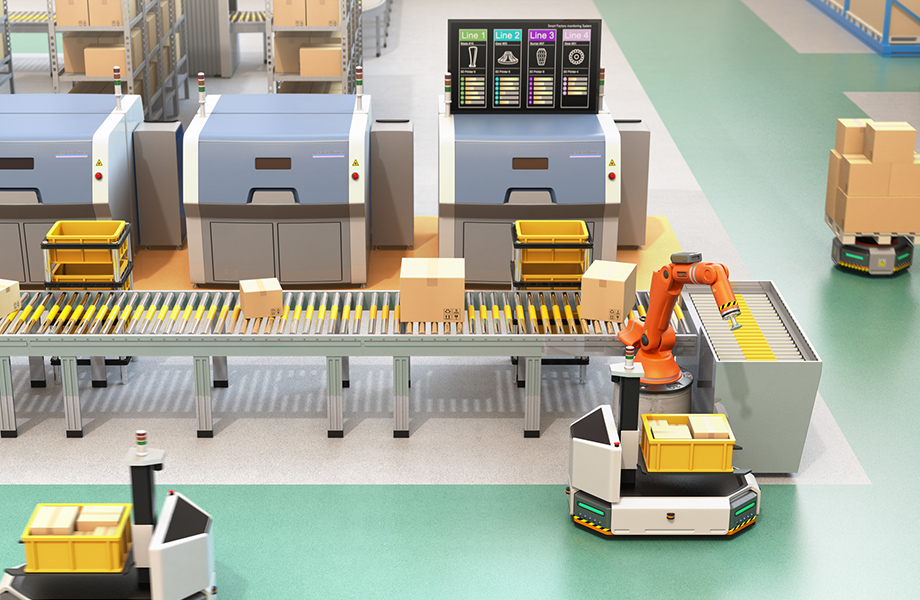
In Technology Solutions Business, we offer IT equipment and services that enhance production efficiency. Through these offerings, we help improve energy efficiency at manufacturing sites and contribute to reducing environmental impact.
In office supplies, we give priority to environment-friendly products (such as pens made from recycled plastics). We also handle novelties used in our business activities that are made of rice resin, bamboo, recycled marine plastics, and other environment-friendly products.
Certification as a Nagoya Nature Positive Partner (Biodiversity Initiatives)

Hagiwara Electric Holdings Co., Ltd. has endorsed the Nagoya Nature Positive Declaration, an initiative launched by the City of Nagoya to promote biodiversity conservation, and has been certified as a Nagoya Nature Positive Partner.In line with the objectives of this initiative, we will continue to work with other partner organizations to promote environmental conservation activities that help protect biodiversity.
* What is Nature Positive
Nature Positive is a global goal to halt and reverse biodiversity loss by putting nature on a path to recovery by 2030 and achieving a net positive state for nature by 2050, compared with 2020 levels.
Environmental Performance Data
Energy Consumption
| FY2023 | FY2024 | FY2025 | ||
|---|---|---|---|---|
| Total energy consumption | 3,831 | 3,743 | 4,059 | |
| Electricity | 2,441 | 2,169 | 2,642 | |
| Heat | 11 | 192 | 215 | |
| Gasoline | 756 | 702 | 668 | |
| Gas | 623 | 680 | 533 | |
| Total renewable energy consumption | 684 | 819 | 2,017 | |
| Renewable energy ratio(%) | 18 | 22 | 50 | |
Water Consumption
| FY2022 | FY2023 | FY2024 | FY2025 | |
|---|---|---|---|---|
| Total water withdrawal | 10,963 | 11,648 | 9,956 | 8,989 |
| Total water discharge | 10,963 | 11,648 | 9,956 | 8,989 |
Total Waste Generation
| FY2021 | FY2022 | FY2023 | FY2024 | FY2025 | |
|---|---|---|---|---|---|
| Industrial Waste Generation※ | 87.7 | 162.6 | 134.1 | 90.6 | 64.9 |
| Municipal Waste Generation※ | 9.3 | 16.2 | 7.8 | 13.1 | 7.3 |
| Hazardous Waste Generation※ | 0 | 0 | 0 | 0 | 0 |
- Scope of Aggregation: Three Major Domestic Companies (Hagiwara Electric Holdings, Hagiwara Electronics, Hagiwara Techno Solutions)
Environmental Violations
FY2021–FY2025: There were no fines or sanctions imposed on the Hagiwara Electric Group for violations of environmental laws or regulations.